
Meet Us At The Top!

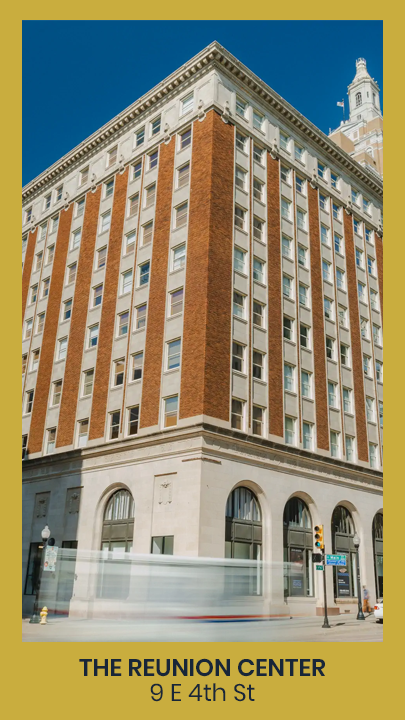
Constructed in 1917 when Tulsa was known as the Oil Capital of the World, the Reunion Center originally housed the First National Bank of Tulsa. Nicknamed “The Oilman’s Bank,” it was a favorite among the city’s powerful energy magnates. Its grand lobby, featuring original brass elevators and marble trim, captures the elegance of that booming era. Today, the Reunion Center stands as a striking reminder of Tulsa’s rich oil industry legacy.
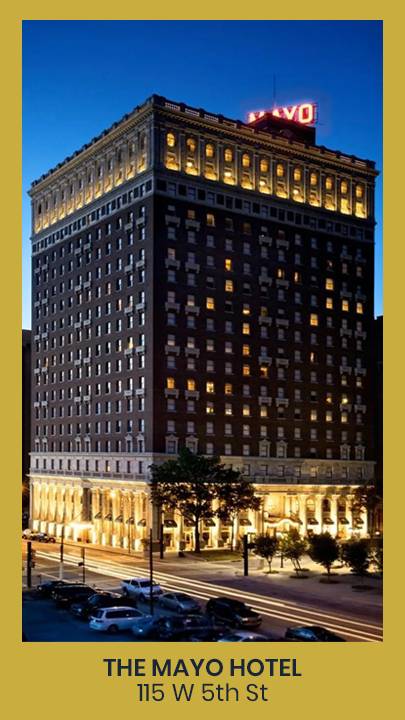
115 West 5th Street, The Mayo Hotel, built in 1925 in Tulsa, Oklahoma, was once the tallest building in the state and a symbol of luxury and innovation. It hosted celebrities, presidents, and oil tycoons during Tulsa’s oil boom era. After closing in 1981 and sitting vacant for decades, it was restored and reopened in the 2000s. Today, the Mayo stands as a beautifully renovated landmark blending historic charm with modern elegance.
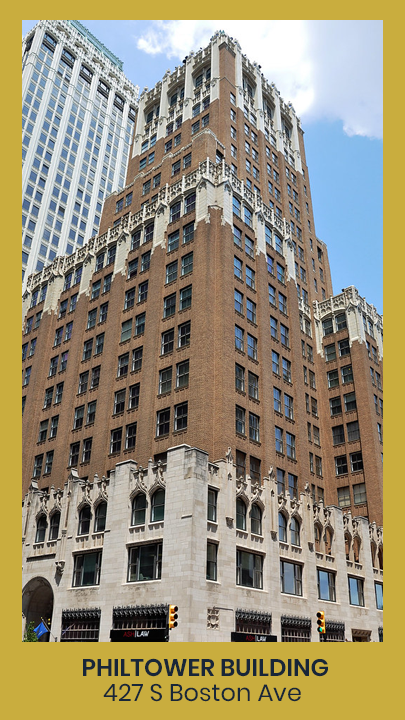
Completed in 1928 by architect Edward Buehler Delk, the Philtower remains a standout of the Tulsa skyline with its regal blend of English Gothic Revival and Art Deco styles. Its iconic sloping roof, tiled with colorful Imperial English shingles, glows beautifully against the night sky. Inside, visitors are greeted by English fan-vaulted ceilings, custom chandeliers, and luxurious travertine marble. Listed on the National Register of Historic Places in 1979, the Philtower endures as a striking symbol of Tulsa’s Oil Capital era.
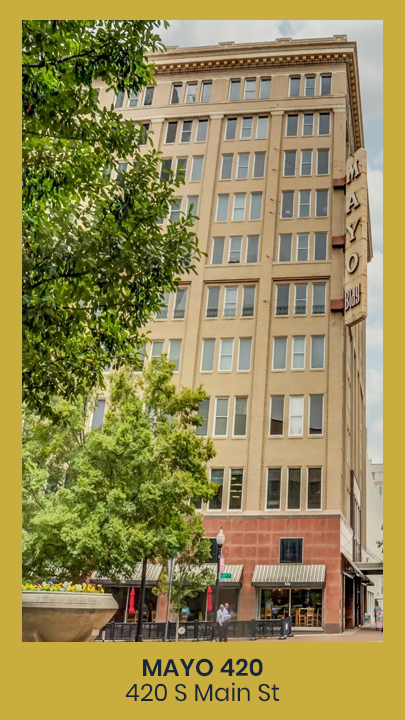
Located in the heart of downtown Tulsa, 420 Mayo sits adjacent to the historic Mayo Hotel, one of the city’s most iconic architectural landmarks. Surrounded by the energy and elegance of Tulsa’s Art Deco district, the building reflects the character and charm that define this storied part of downtown. Its setting offers a unique vantage point to experience the city’s skyline while celebrating the rich history woven into Tulsa’s urban landscape. Today, 420 Mayo serves as a modern complement to the enduring legacy of the Mayo and the vibrant spirit of downtown Tulsa.
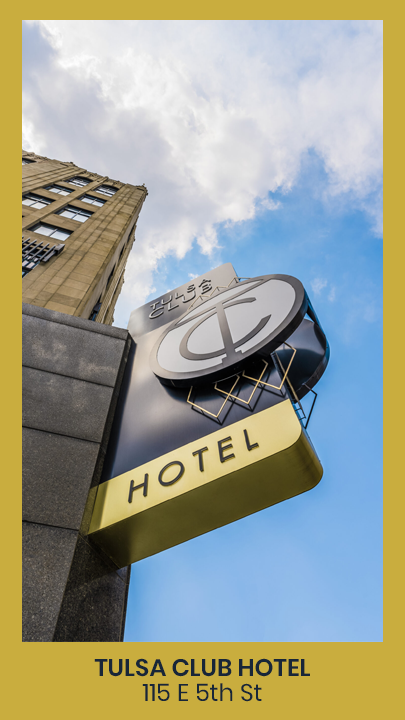
Originally built in 1927 as the Tulsa Club Building, the Tulsa Club Hotel blends the grandeur of Tulsa’s Art Deco past with modern boutique hospitality. Once home to one of the city’s most exclusive social clubs, the historic building has been thoughtfully restored, preserving its iconic architectural details and timeless character. Inside, elegant spaces, original design elements, and refined finishes create a distinctive setting for gatherings and celebrations. Located in the heart of downtown Tulsa, the Tulsa Club Hotel offers a one-of-a-kind backdrop surrounded by the city’s rich history, culture, and energy.
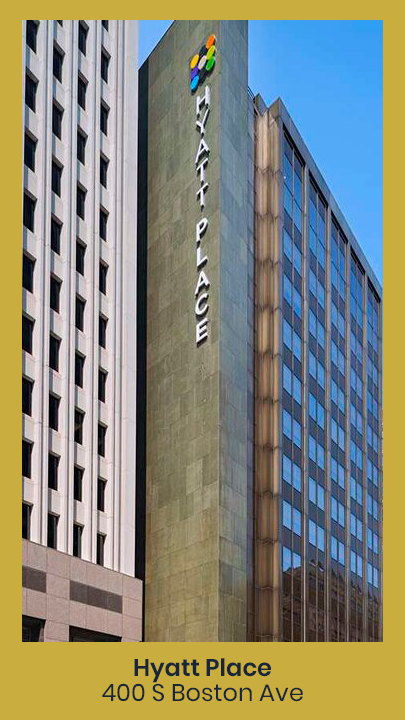
Set in the historic 14-story Boston Avenue Building, Hyatt Place offers a unique blend of mid-century architecture and modern hospitality. Originally built in 1967, the building has been reimagined as a stylish downtown hotel while preserving its classic character. At the heart of the experience is the 14th-floor View Ballroom, featuring floor-to-ceiling windows and sweeping views of the Tulsa skyline. Just steps from the BOK Center and Arts District, Hyatt Place is a timeless backdrop in the heart of the city.